

Pomace, the solid residue from fruit and vegetable processing, serves as a valuable raw material in organic fertilizer production. However, its high moisture content often exceeds 80–90%, creating challenges in handling, storage, and processing. When the pomace remains too wet, fertilizer machinery such as granulators, composting units, and pelletizers cannot function efficiently. Excessive water leads to energy waste during drying, uneven granule formation, and unstable product quality. Therefore, managing the water content in pomace becomes a critical step in improving the overall efficiency and stability of fertilizer production systems.
Understanding High-Moisture Organic Waste and Its Industry Applications
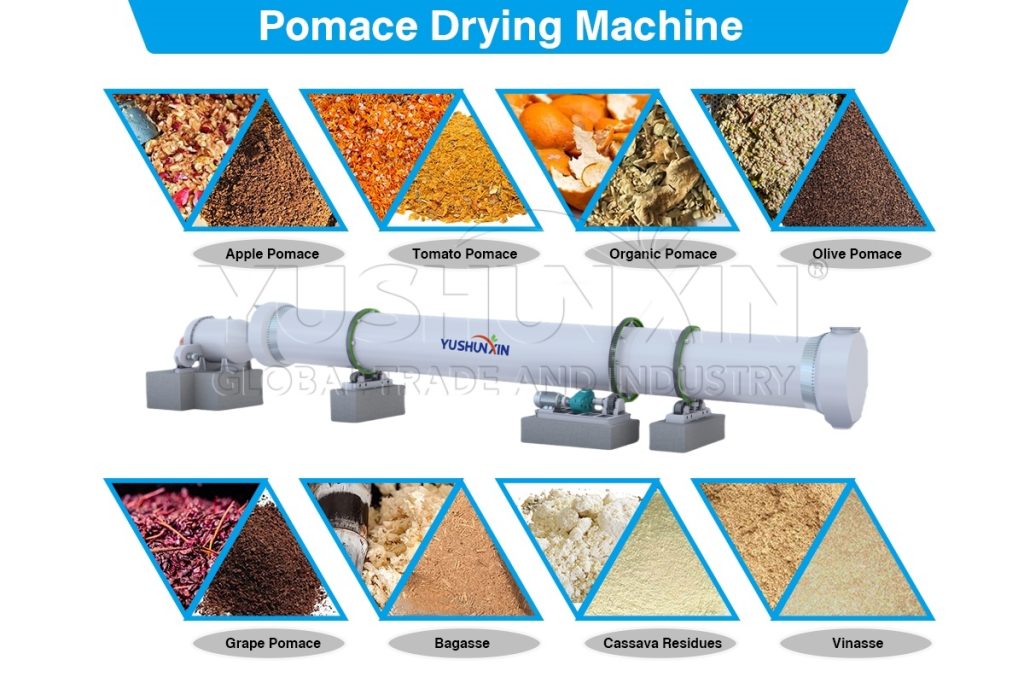
Different industries generate diverse types of high-moisture organic waste, such as fruit pomace from juice factories, vegetable residues from food processing plants, and distiller’s grains from breweries. Each material has specific characteristics and requires tailored dewatering or drying techniques. For example, apple pomace has fine fibers that retain water strongly, while grape pomace contains oil and skins that influence the drying process.
In the organic fertilizer industry, these raw materials become essential nutrient sources after proper moisture reduction and composting. Fruit pomace compost provides high organic matter and promotes beneficial microbial activity, while vegetable waste compost supports nitrogen enrichment. The dairy and wine industries also benefit from turning pomace and other residues into bio-organic fertilizer, forming a sustainable production cycle. By controlling water content through suitable equipment, each industry increases resource utilization and reduces environmental burdens.
Key Stages of Water Reduction in Pomace Processing
The fertilizer production line for pomace usually includes four main stages of water reduction: mechanical dewatering, thermal drying, composting adjustment, and granulation. Each stage significantly affects the final granule quality and production efficiency.
In the first stage, a dewatering machine or dehydrator lowers moisture from over 90% to around 60–70%. This mechanical separation reduces the load on subsequent drying systems. The second stage applies a pomace dryer, which further decreases the water content to below 20%, preparing the material for composting or direct granulation. During composting, microbial heat helps evaporate residual moisture and stabilize organic matter, bringing the water level closer to 30–40%. Finally, in the granulating or pelletizing stage, a granulator or pelletizer produces uniform fertilizer particles after the pomace reaches a moisture level under 10%. Each stage connects closely with the next, and the precision of water control directly determines the success of the entire fertilizer manufacturing process.
How Pomace Dryer Design Enhances Fertilizer Machinery Efficiency
The performance of fertilizer processing machinery depends strongly on the design and operation of the pomace drying system. A high-efficiency pomace dryer ensures stable temperature distribution, optimized airflow, and consistent drying results. When the dryer achieves accurate water reduction, the granulator maintains better pellet shape and hardness, and the composting equipment operates under ideal humidity for microbial activity.
Modern pomace dryers use advanced heat exchange technology to reduce energy consumption and improve drying uniformity. Some systems integrate automatic moisture monitoring, allowing continuous adjustment of drying parameters. These technical designs enhance the efficiency of the entire fertilizer production line, minimize material loss, and extend machine lifespan. For entrepreneurs and fertilizer producers, choosing suitable drying equipment ensures better production stability and higher output quality.
Conclusion
The water content in pomace directly influences every stage of fertilizer production, from compost preparation to granulation and pelletizing. When moisture remains high, fertilizer machinery struggles to maintain efficiency, product uniformity declines, and energy costs rise. Through progressive dewatering, thermal drying, and controlled composting, manufacturers can reduce pomace moisture from over 90% to less than 10%, creating ideal material conditions for fertilizer production.
A professional drying equipment manufacturer—Yushunxin—offers specialized pomace dryer systems that combine precise moisture control with reliable mechanical design. These solutions help fertilizer producers optimize water reduction processes, improve granule quality, and enhance the overall efficiency of their pomace-based fertilizer manufacturing line. You can visit: https://www.fertilizerdryer.com/pomace-drying-machine/