

In most liquid fertilizer production lines, the first technical challenge is preparing raw materials to a pumpable and fermentable state. Whether the feedstock is manure slurry, food waste puree, plant residues, or partially fermented organic matter, an appropriate liquid fertilizer raw-material crusher is essential. These machines break down solids, reduce particle size, and prevent blockages in pumps and pipelines. Below are the most practical types of crushers used in liquid fertilizer processing today.
1. Wet Organic Waste Crusher for High-Moisture Inputs
For producers handling fresh livestock manure, biogas digestate, or kitchen-waste slurry, the wet material crusher—also known as a high-moisture organic waste pulverizer—is the most commonly used option.
Features & Applications:
- Effective for materials with moisture above 40–50%.
- Breaks large clumps into fine particles.
- Ideal for chicken manure slurry, cow dung filtrate, and vegetable-waste mash.
This type of slurry pretreatment grinder ensures smooth flow into mixing tanks and fermentation vessels.
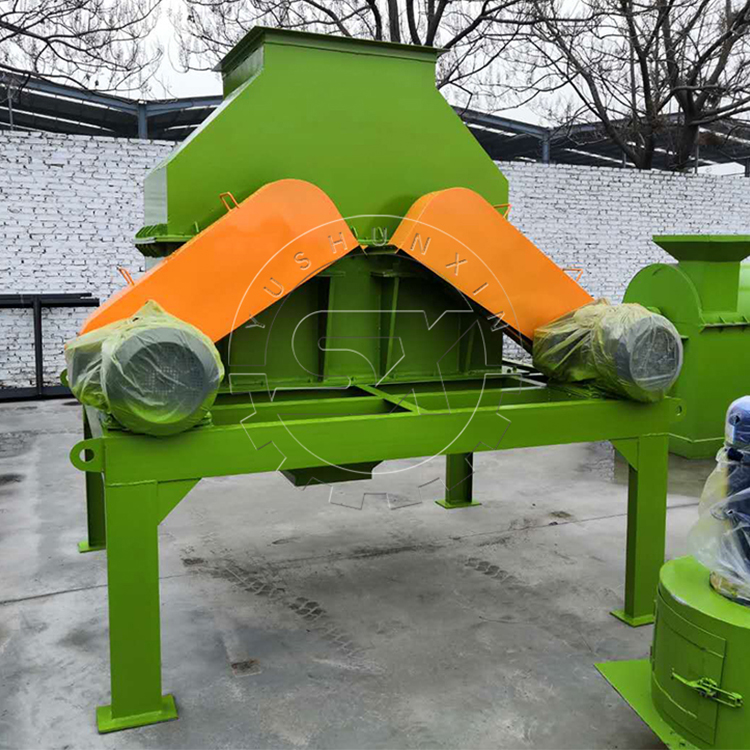
2. Vertical Chain Crusher for Semi-Wet Raw Materials
A chain-type crusher is widely used in medium-scale liquid organic fertilizer processing where materials are not fully liquid but still contain significant moisture.
Why choose it:
- High throughput for semi-wet manure cakes.
- Produces uniform particle size to support stable agitation and fermentation.
- Handles residues from composting, sludge drying, and raw organic waste.
Many manufacturers integrate a chain crusher directly before the mixing or dilution stage.
3. Straw & Fiber Pulverizer for Plant-Based Liquid Fertilizer
Some biofertilizer lines incorporate crop residues—such as straw, husks, or leaves—into their formula. These fibrous materials require a dedicated fiber-crushing machine before they can be liquefied.
Benefits:
- Reduces long fibers that otherwise tangle in pumps.
- Speeds up enzymatic hydrolysis and fermentation.
- Suitable for seaweed-based or plant-extract liquid fertilizers.
This organic residue grinder is often included in high-capacity production lines. Learn more!
4. Hammer Mill for Dry Additives & Micro-Powders
When a plant also uses powders—like humic acid, mineral additives, or stabilizers—a hammer mill becomes important.
Advantages:
- Adjustable particle size for formulation precision.
- Handles both dry manure powder and supplemental materials.
- Ensures uniform mixing in preparation tanks.
Hammer mills complement other crushers in diversified liquid fertilizer manufacturing systems.
How to Choose the Right Crusher
Before selecting your liquid fertilizer crushing equipment, consider:
- Moisture content of feedstock
- Required particle size for pumping
- Fermentation process (anaerobic/aerobic/semi-aerobic)
- Daily processing capacity
Are you searching for an efficient solution to enhance the processing of your liquid fertilizer materials? Look no further! Our advanced crusher is specifically designed to handle liquid fertilizer components with precision and ease. Welcome to visit: https://www.liquidfertilizerplants.com/products/fertilizer-crusher-for-liquid-fertilizer-making/