

Root vegetable factories rarely get the same peeling result from every crop because potatoes, carrots, ginger, sweet potatoes, cassava, and yam differ in skin thickness, shape, soil load, and acceptable flesh loss. A factory that compares an industrial brush peeling machine for mixed root vegetables with an abrasive potato peeler should therefore start with the finished-product requirement rather than machine appearance. Brush rollers combine water spray and controlled friction, so they suit washing, polishing, and light peeling. Abrasive plates or friction surfaces create stronger skin removal and often suit potatoes or similar materials that need a deeper peel. The correct choice affects food preparation efficiency, raw-material yield, downstream cutting, wastewater handling, and the stability of the complete food production line.
What Does Brush Peeling Machine Vs Abrasive Potato Peeler Mean For Root Vegetable Processing?
Brush peeling and abrasive peeling apply different mechanical actions to the crop surface. Brush rollers rotate against the material while spray water carries away soil and loosened peel. Processors can choose softer brushes for washing and polishing or harder brushes when the food processing procedure requires more skin removal. Abrasive peelers rely on abrasive rollers, plates, or friction surfaces that remove more of the outer layer during a shorter treatment cycle. This difference matters because root vegetables such as potatoes, carrots, and sweet potatoes do not share one skin structure. A fresh ginger processor may value surface protection around irregular curves, while a French fry factory may prioritize a cleaner potato surface before trimming and cutting. A useful equipment comparison therefore considers peel depth, product loss, soil level, crop geometry, hourly throughput, and the required food manufacturing process after peeling.
Which Industrial Brush Peeling Machine Fits Potatoes, Carrots, Ginger, Sweet Potatoes, And Cassava?
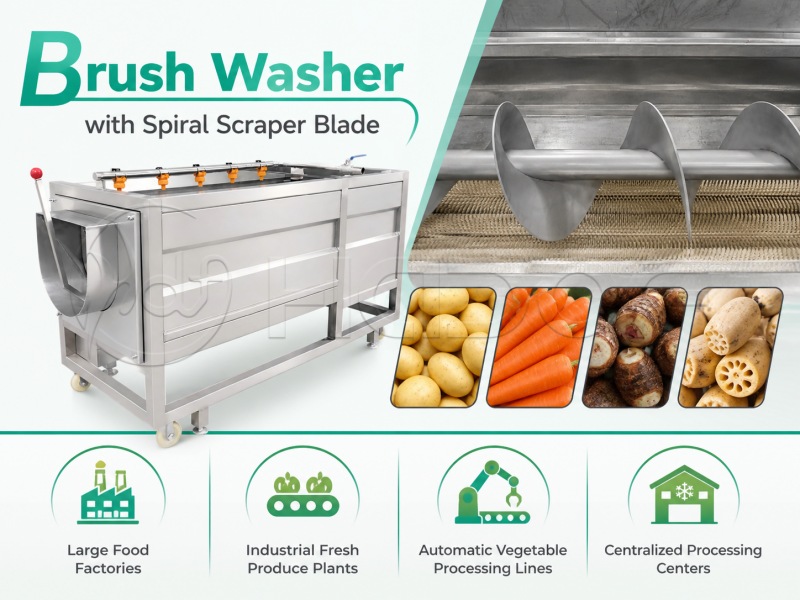
A brush peeling system gives a food factory more control when the material needs cleaning and light peeling at the same stage. Hadof lists four standard brush lengths of 800, 1,000, 1,500, and 2,000 mm, with standard capacities that range from about 700 to 2,000 kg/h. Those options let processors match machine length to factory space and planned food production capacity. A brush peeler with adjustable soft and hard roller options can support potatoes, carrots, ginger, sweet potatoes, cassava, and other firm root crops when the project team selects the brush hardness around skin strength and desired finish. Soft bristles favor washing and polishing, while harder bristles increase friction. Some continuous configurations also use spiral scraper elements to strengthen peeling and move material through the machine. This flexibility helps a root vegetable plant balance surface cleaning, peel removal, and raw-material yield before slicing, dicing, freezing, drying, frying, or packing.
When Does An Abrasive Potato Peeler Make More Sense For Small-Batch Food Preparation?
An abrasive potato peeler often fits a smaller operation when the factory needs stronger peeling but does not need continuous flow through every processing stage. Abrasive plates and friction surfaces remove potato skin quickly, and spray water removes loosened peel, mud, and starch from the treatment area. Small food factories, central kitchens, and potato preparation rooms may combine a brush washer for pre-cleaning with a separate abrasive peeler for final skin removal. A broader root vegetable washing and peeling process comparison also distinguishes brush peeling from abrasive peeling by skin thickness, product loss, capacity, and production mode. The combined arrangement can give a project team flexible food handling equipment without forcing every crop through the same peeling intensity. However, batch transfer between machines adds material handling, labor, and scheduling steps, so higher-volume food preparation lines often favor continuous brush or scraper-assisted systems.
How Do Brush Hardness, Spray Water, And Conveyor Speed Affect A Root Vegetable Washing And Peeling Machine For Fresh Ginger?
Fresh ginger creates a useful test for peeling design because knobs, curves, and recessed areas hold soil while the irregular surface increases the risk of unnecessary flesh loss. A continuous roller brush peeling system for potatoes and ginger lets the project team adjust the cleaning action through brush type, spray water, and material residence time. Softer bristles can focus on soil removal and polishing, while harder brushes increase the peeling action. Clean water spray carries away mud and peel fragments so the brushes keep contacting the crop surface instead of recirculating debris. Conveyor or roller speed then controls how long the crop stays inside the cleaning zone. These variables also influence food waste disposal management because stronger peeling creates more peel solids and wastewater load. The Hadof food-processing solution overview shows how washing and peeling equipment can connect with cutting, dewatering, drying, frying, freezing, and packaging machinery when a factory needs a wider food processing system.
How Should A Root Vegetable Processing Plant Compare Capacity, Product Loss, And Line Integration?
A root vegetable processing plant should compare the two peeling methods through the complete production route rather than through one machine specification. The project team should first define raw materials, soil level, skin thickness, required peel depth, hourly capacity, working hours, and downstream products. The team should then estimate how each method affects flesh loss, labor, water treatment, peel disposal, cleaning time, and line balance. A root vegetable brush peeling equipment package for food factories makes more sense when continuous washing, polishing, and controlled peeling support several root crops in one facility. A separate abrasive peeler can make more sense when a small operation mainly handles potatoes and accepts batch processing. An equipment quotation should also reflect factory layout, available water and power, upstream soaking or washing, and downstream cutting or cooking machinery. This approach helps investors compare a cost-effective food production technology against the actual operating requirements instead of selecting machinery only by purchase budget.
Which Peeling Method Gives A Better Overall Root Vegetable Production Result?
Neither method solves every root vegetable project. Brush peeling gives processors broader control over washing, polishing, and light-to-medium peeling, especially for carrots, ginger, sweet potatoes, cassava, and mixed root crops. Abrasive peeling gives potato-focused operations a direct method for stronger skin removal, especially when batch food preparation fits the production schedule. Factories with multiple raw materials should evaluate skin strength and acceptable yield loss before they finalize equipment. Project planners can review the brush peeling machine details when they need to compare roller length, brush type, capacity, and line integration. If project teams have further interest in brush peeling configurations for a root vegetable processing plant, they can learn more about the equipment here: https://www.hadofps.com/products/brush-peeling-machine/