

In recent years, the demand for organic fertilizers has surged due to increasing awareness of sustainable agricultural practices. Cow dung stands out as a rich source of nutrients, making it an excellent raw material for organic fertilizer production. However, producing high-quality cow dung fertilizer involves careful attention to detail during the composting and granulation processes.
Understanding Cow Dung Characteristics
Cow dung is renowned for its balanced nutrient profile, containing essential elements such as nitrogen, phosphorus, and potassium. Despite its benefits, it also presents challenges due to its moisture content and potential ammonia emissions. Proper management of these aspects is crucial to producing effective fertilizer. Click here to detail step of making cow manure fertilizer.
Key Considerations in the Composting Process
- Moisture Management: Cow dung typically contains a high moisture content. Effective composting requires maintaining an optimal moisture level, generally around 50-60%. This can be managed through controlled aeration and the addition of dry materials when necessary.
- Carbon-to-Nitrogen Ratio: Achieving the right balance between carbon and nitrogen is critical. Cow dung is naturally high in nitrogen, so incorporating carbon-rich materials, such as straw or sawdust, can improve compost quality and prevent odors.
- Temperature Control: The composting process involves microbial activity that generates heat. Regulating the temperature is vital to ensure microbial efficiency and to eliminate potential pathogens. Monitoring temperatures and turning the compost pile regularly can help maintain the ideal conditions.
The cow dung compost turning machine is the main equipment used in this stage. With its help, you can produce high-quality compost.
Considerations in the Granulation Process
- Particle Size: The granulation process relies heavily on the particle size of the raw material. Ensuring that the cow dung is sufficiently processed to a fine consistency can enhance the binding process, resulting in uniform granules.
- Binder Use: Selecting appropriate binding agents can improve the structural integrity of the granules. Natural binders such as bentonite or starch are often used to enhance the durability and physical properties of the finished product.
- Drying and Cooling: After granulation, it is essential to thoroughly dry and cool the granules. This prevents moisture retention, which can lead to microbial growth and product degradation. Implementing efficient drying systems ensures the longevity and effectiveness of the fertilizer.
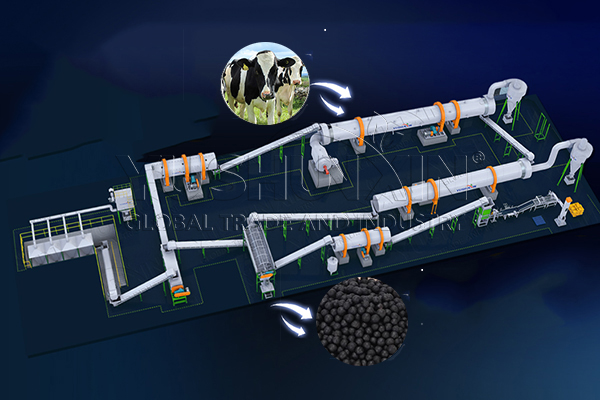
There is a complete cow dung fertilizer making line for sale in YUSHUNXIN, welcome to consult!
Conclusion
Operating a cow dung fertilizer production line requires a strategic approach to address the inherent characteristics of cow dung. By focusing on meticulous moisture and temperature management, optimizing the carbon-to-nitrogen ratio, and ensuring precise granulation techniques, producers can create high-quality organic fertilizers that support sustainable agriculture. As the industry evolves, adopting best practices in production processes will remain crucial for achieving both economic and ecological benefits. Welcome to visit :https://www.fertilizerequipmentprice.com/cow-dung-fertilizer-production-line/