
A used disc pelletizer can lower the initial cost of a mineral fertilizer plant, while a new disc granulator machine gives you a fresh service life and current specifications. When you plan continuous production, you can compare capacity, disc diameter, motor power, and replacement parts before making a decision. Plant owners who process phosphate rock, limestone, dolomite, and potassium feldspar often choose a pan-type machine for its simple structure and adjustable angle. This fertilizer equipment supports steady granulation with a clear path from powder to finished pellets.
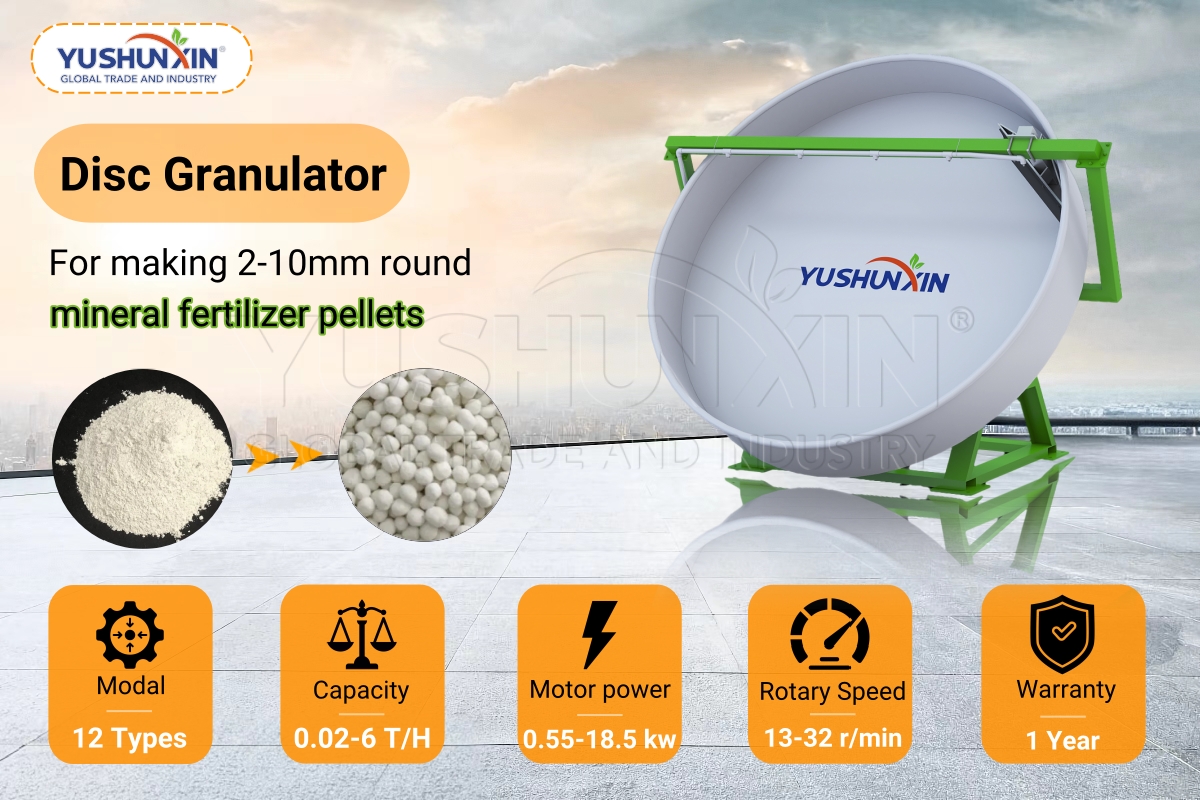
used disc pelletizer
Should plant owners choose a new disc granulator or a used disc pelletizer for continuous production?
Your choice depends on run hours, wear, spare parts, and output consistency. A new disc granulator machine comes with current bearings, reducer parts, and a clean disc surface, which helps a continuous line avoid early stoppages. A used machine may reduce initial spending, but your maintenance team should inspect the disc, frame, drive unit, and spray system before purchase. For long campaigns, a new unit often gives more predictable granule size and lower repair frequency. Either option can work when the disc angle and speed match your material. The right mineral fertilizer processing plant choice keeps your production schedule stable and your operating cost measurable.
Which mineral fertilizer materials suit a disc granulator machine?
Phosphate rock, limestone, dolomite, and potassium feldspar all suit pan granulation when your team reduces them to the correct powder size. The rotating disc rolls the powder into pellets as workers apply water or a binder through a spray system. This wet method produces uniform mineral granules without complicated tooling. You can adjust the disc angle and rotation speed to handle fine powders or slightly coarser materials. The machine also accepts blended mineral formulations when you combine several ores in a planned ratio. By keeping the feed rate steady, your operators help the mineral fertilizer manufacturing system produce consistent pellets from one batch to the next.
What equipment features support continuous mineral fertilizer granulation?
A strong frame, adjustable disc angle, variable speed control, and a reliable spray unit support continuous work. The disc surface should resist wear and release material smoothly, while the drive system should handle the motor load without overheating. A spray system gives your operators precise control over moisture, which directly affects granule formation and size. You can also add a scraper assembly to prevent powder from sticking to the disc edge. These features reduce downtime and help the line maintain a steady granulation ratio. For larger output, plant owners can connect a crusher and a screening machine to the same fertilizer granulation line. A dependable mineral fertilizer granulation technology gives your project a clear foundation for future expansion.
How can a mineral fertilizer manufacturing system support project investment decisions?
You can evaluate a project by checking hourly capacity, power consumption, labor needs, and the availability of spare parts. A clear fertilizer manufacturing process helps your team estimate operating hours and maintenance intervals before construction begins. When the line uses standard components, your plant can find replacement parts quickly and keep downtime short. The disc granulation route also fits small and medium facilities because it occupies less space than some drum systems. For background on plant nutrients, you can review the mineral fertilizer article. A mineral fertilizer equipment manufacturer can provide drawings, motor data, and installation support for your specific ore materials.
Yushunxin offers disc granulators and related mineral fertilizer equipment for continuous production. If your team has interest in the machine, you can learn more about https://www.mineralfertilizerproductionsolutions.com/product/disc-granulator-machine.