

Fresh cow manure does not become saleable fertilizer by passing through one machine. Its moisture, collection method and daily volume affect composting, while the required powder or granular product determines the downstream process. Before comparing cow dung organic fertilizer production equipment, start with four facts: manure quantity, moisture, operating hours and final product form.
Start with the Manure Entering the Line
Scraped manure mixed with bedding behaves differently from slurry collected by flushing. Wet material may need dewatering, while manure with little structure may need straw, sawdust or other dry material before fermentation.
Good composting fundamentals depend on balanced moisture, oxygen and carbon-rich material. Once the compost is mature, crushing removes lumps and screening separates stones, fibres and oversized particles. This gives you a complete cow manure fertilizer processing route based on the real feedstock rather than a standard machine list.
Choose Powder or Granules Before Selecting Machines
If your market accepts powder fertilizer, the route can remain short: composting, crushing, screening and packaging. Mixing can be added when the formula includes other nutrients.
Granules require more stages. Mature compost is crushed and mixed before granulation, then drying, cooling, screening, coating and packing can follow when the selected process requires them. The equipment configuration for a cow dung fertilizer line therefore changes with the product you plan to sell.
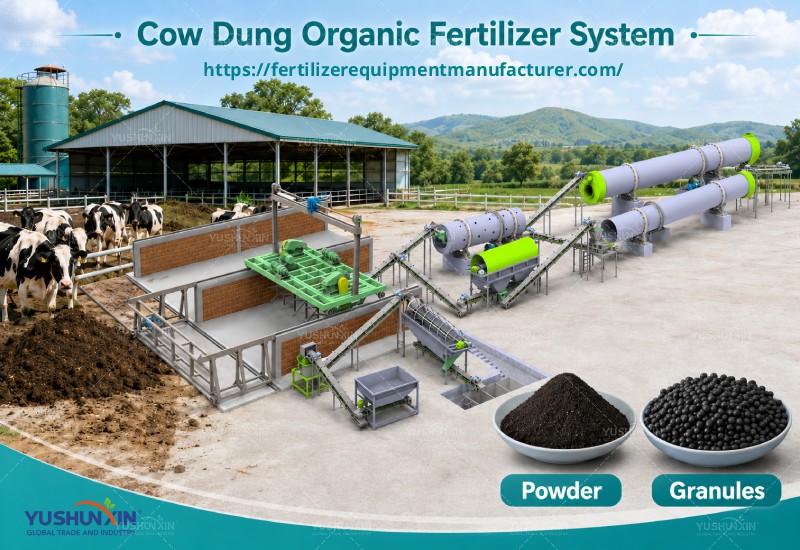
For microbial products, review the cow dung biofertilizer production route. Adding functional bacteria after high-temperature drying can help avoid unnecessary heat exposure.
Match Every Stage to One Realistic Capacity
Daily fresh-manure input is not the same as finished-fertilizer output. Water loss during composting, screening rejects, recycled granules and cleaning stops all affect production.
A capacity-based cow dung fertilizer plant solution matches the composting area, crusher, mixer, granulator, screener and packing machine to one output target. A larger granulator brings little value when the composting section cannot supply enough mature material.
Prepare the Information Needed for a Quote
For a useful quotation for a commercial cow dung fertilizer project, provide:
- Fresh manure quantity and collection method
- Moisture and bedding content
- Existing composting facilities
- Powder or granular product requirement
- Hourly output and operating schedule
- Granule and bag sizes
- Workshop dimensions
- Voltage, fuel and installation country
Photos and a simple site drawing also help us plan storage, feeding and conveyors. You can learn more before sending the details for a preliminary configuration: https://fertilizerequipmentmanufacturer.com/how-to-make-organic-fertilizer-from-cow-dung