

With the rapid growth of intensive poultry farming, chicken manure has become a valuable raw material rather than a disposal problem. Many fertilizer producers are now exploring how to make chicken manure fertilizer pellets that are easy to store, transport, and apply. Compared with raw manure, pelletized products offer higher commercial value and more stable nutrient performance.
Why Pelletizing Chicken Manure Makes Sense
Fresh chicken manure contains high levels of nitrogen but also excessive moisture and odor. By converting it into granules through a chicken manure fertilizer pellet production process, producers can significantly improve handling efficiency while reducing nutrient loss. Pellet fertilizers also allow more accurate application rates, which is increasingly important in modern agriculture.
Key Steps in Chicken Manure Pellet Production
A typical chicken manure pelletizing workflow starts with manure pretreatment. Raw manure is first dewatered or partially dried to achieve suitable moisture levels. This step is essential for ensuring smooth granulation and preventing pellet deformation.
Next comes crushing and mixing. Dried manure is processed into uniform particles and blended with additives such as organic matter, binders, or beneficial microbes. This stage directly affects pellet strength and nutrient consistency in the final product.
Granulation is the core stage of the chicken manure fertilizer granulation line. Depending on production scale and material condition, disc granulators, rotary drum granulators, or roller press granulation machines may be used. Each type of chicken manure pellet machine offers different advantages in terms of output capacity, granule shape, and operating cost.
After pellet formation, the granules usually pass through drying and cooling units. Controlled drying stabilizes pellet hardness and prevents caking during storage. Screening equipment then separates qualified pellets from fines, which can be recycled back into the granulation system. Learn more!
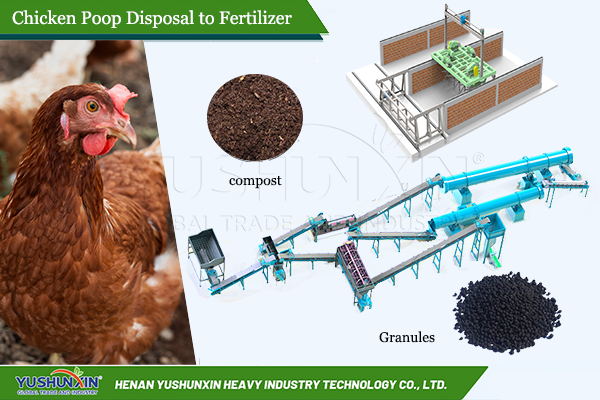
Choosing the Right Chicken Manure Pellet Production Line
When planning a chicken manure fertilizer pellet production line, capacity matching is critical. Small-scale producers may focus on compact systems with lower energy consumption, while large poultry farms often require continuous, automated chicken manure granulating plants.
Material moisture, desired pellet size, and labor availability all influence equipment selection. A well-designed chicken manure fertilizer pellet plant should allow flexible adjustment to handle seasonal variations in manure quality.
Final Considerations for Stable Operation
Consistent raw material management, regular equipment maintenance, and proper process control are essential for long-term success. For producers learning how to make chicken manure fertilizer pellets, investing in a balanced and reliable pelletizing system often delivers better returns than focusing on individual machines alone. YUSHUNXIN can provide you with the chicken poop fertilizer business plan according to your budget, welcome to consult!
As demand for organic fertilizers continues to grow, pelletized chicken manure remains a practical and scalable solution for both environmental management and commercial fertilizer production. Welcome to visit: https://www.fertilizerequipmentprice.com/chicken-manure-pellet-machine/