

Bio liquid fertilizers are gaining global attention as farmers seek more sustainable and efficient ways to boost crop yields. Before investing in a liquid biofertilizer production line, one of the key questions is: what raw materials can be used, and how do they affect production efficiency? Understanding raw material options not only ensures better fertilizer quality but also helps optimize your production cost.
1. Common Raw Materials for Bio Liquid Fertilizer
- Animal Waste
- Cow dung, pig manure, and poultry manure are widely used for their rich nitrogen and organic matter content.
- These raw materials need pre-treatment (sedimentation, filtration, sterilization) to remove impurities and pathogens before fermentation.
- Crop Residues and By-products
- Materials such as corn stalks, wheat straw, rice husks, and vegetable scraps provide cellulose and lignin, which improve the organic base of biofertilizer.
- When combined with animal waste, they balance the carbon-to-nitrogen ratio for efficient fermentation.
- Biogas Residue and Slurry
- A by-product from biogas plants, rich in nutrients and partially digested organics.
- It reduces production costs while providing a steady raw material source for commercial-scale liquid fertilizer plants.
- Microbial Agents
- Beneficial strains like Azotobacter, Rhizobium, and Phosphate-Solubilizing Bacteria (PSB) are added after the liquid base is fermented.
- These microbes enhance nutrient availability and improve fertilizer effectiveness in the soil.
- Supplementary Nutrients
- To create customized formulas, NPK nutrients, amino acids, trace elements (Zn, Fe, Mn), and growth regulators can be blended in.
- This ensures your bio liquid fertilizer meets the requirements of different crops and markets.
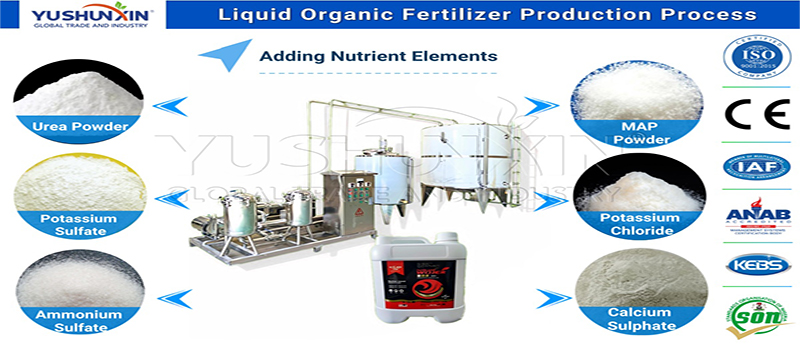
2. Processing Technology for Raw Materials
Raw materials alone are not enough. Proper liquid biofertilizer production equipment is required to transform them into high-value liquid fertilizer:
- Solid-liquid separator → removes coarse fibers and reduces sludge content.
- Fermentation tank (with temperature control) → ensures hygienic and stable microbial fermentation.
- Mixing and dosing system → integrates microbial agents, nutrients, and additives evenly.
- Filtration & sterilization units → guarantee purity and shelf stability of the final product.
- Automatic filling machine → packs the fertilizer into bottles, drums, or IBC tanks for sale.
3. Why Raw Material Selection Matters
Choosing the right raw materials affects:
- Production cost – using biogas residue or crop waste lowers raw material expenses.
- Fertilizer quality – manure-rich inputs increase organic matter and microbial activity.
- Market positioning – customized additives help you target niche markets like organic farms or greenhouse growers.
4. Case Example – Saudi Arabia Customer
One of YUSHUNXIN' clients in Saudi Arabia built a 5,000 L/H liquid biofertilizer plant using cow dung slurry combined with vegetable waste. By adding trace elements and Azotobacter during the mixing stage, they created a formula tailored for arid soils. Within six months, their product gained recognition among local growers, showing how raw material selection directly impacts market success.
Conclusion
Raw materials such as manure, crop residues, biogas slurry, and microbial agents form the backbone of bio liquid fertilizer manufacturing. With the right combination and professional equipment from Yushunxin, you can transform agricultural by-products into a high-value fertilizer product that reduces waste and increases farm profitability.
👉 Want to design a liquid biofertilizer production line based on your available raw materials? Contact us here to get a customized solution.